Showing posts with label lessons from children. Show all posts

Monday, December 19, 2011

It's Okay to Be Different - Let's Celebrate Both

My sister made this in kindergarten ten years before I started dating my Jewish spouse. It is now his stocking, which hangs proudly on my parents' mantle. Thank you Mrs. Ackerman!

Our Chrismukkah mantle last year
I love the winter festivals because they have so much in common. Each holiday is a cultural reaction to the universal human need for light in the darkest time of year. We all need hope that the light and warmth of spring will return. The light also represents hope in humanity. Someday we will be our best selves and goodness and peace will blossom here on earth. How we go about bringing that light into our lives through the darkness differs, but they are all fun, yummy, and meaningful. This is why, in my family, we celebrate both Hanukkah and Christmas. Turns out we're not the only ones! Check out Susan Katz Miller's post from her blog On Being Both and her article from the Huffington Post.

What concerns me, however, is the reaction Susan got from her Post article. So many feel that celebrating more than one tradition dilutes them all. I simply disagree. As Todd Parr says, "it's okay to be different," and our differences make us beautiful. So, here is another lesson from kindergarten.
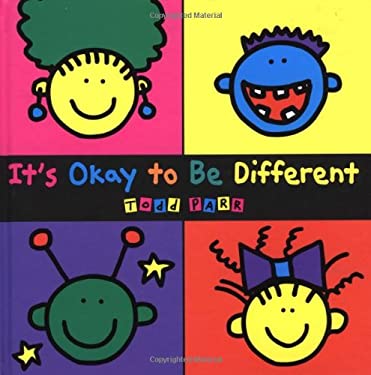
Before the winter break, I get to teach my favorite unit: the festivals of light. It is the culmination of work started before Thanksgiving that celebrates the richness of our diverse country. What I find remarkable is that the celebrations have so many beautiful similarities. In November, I lay the foundation for the study with the unit called "we are all the same because we are all different." I read books by Todd Parr and give a presentation about the factual Harvest Feast of 1621(called the first Thanksgiving) using Scholastic's amazing virtual field trip to weave in the theme of sharing our differences and gifts with others. We celebrate our differences when we read different versions of Stone Soup. When we make our own soup, the students realize it would be far less tasty if there was only one ingredient instead of 17 different ones. That gets translated back to our classroom community where it starts to sink in that our differences are what make our class special and interesting.
 
The themes that link the winter festivals are beautiful - hope-giving light, the anticipation of spring, celebrations that bring family and friends together, giving to show thanksgiving, eating foods that help us feel connected to our cultural roots, and telling stories that remind us good will out. This is why I have no qualms about celebrating Christmas, Hanukkah, Diwali, and Ayyam-i-Ha all together.

This year, I have a student who is a practicing Baha'i. This child's parents are good teachers of their fatih and advocates for diverse religious representation in the classroom. From what I have learned so far, one of the main beliefs of the Baha'i is the oneness of God. Their winter festival is Ayyam-i-Ha, which celebrates charity, unity, and faith in God. I'm so excited to add this holiday to our repertoire. In February, we will make a service wreath to count down the days until the celebration. It is a lot like an advent wreath, but each card will have a service project on it. I'm starting to feel like Baha'is do a better job of celebrating the true meaning of Christmas than some of us Christians do.


Our wreath will look something like this, except on each card there will be an act of kindness I will challenge the students to perform.


This year, we will continue to celebrate both. For Hanukkah, we will give thanks that God works miracles. When we light the menorah and say the blessings, we will remember that we are connected to a rich tradition of being in relationship with God. Our hope that comes from God may sometimes be as small as a candle's flame, but it is eternal. When we light the Christmas tree, we will give thanks that God sends hope into the world. Sometimes it is in the form of a little baby born humbly in a manger. Sometimes, it comes in the form of a reconciliation village in Rwanda, in new friendships formed, or in the right words said at the right time. For us this year, it truly comes in the form of a baby boy. This child bears the hope of our hearts that we will raise a diplomat who can speak two religious languages and find God by multiple paths - a child who sees we are more the same than we are different, but our differences make us beautiful.


Sunday, December 11, 2011

Stop being busy and listen!

There are times when God's voice is as subtle as the brushes of a butterfly's wing that are my unborn child's first kicks. Then there are times when it is as loud the blast of an organ pipe. Yet it is most discernible when God speaks to me through the voice of a child.

At the school where I teach, the tradition in the kindergarten is to make gingerbread houses in December. It is a fun and tasty experience for the children and a lot of prep work for the teachers. The morning of our "build," I had to be out of the classroom for about twenty minutes before the event was to take place. Therefore, I was running around like a chicken with my head cut off from the moment I walked in my classroom door. Finally, just before we were about to start, I sat down with my students, took a deep, centering breath and said, "Friends, I'm sorry I've been so busy this morning. This time of year, there is so much going on, grown-ups tend to get a little crazy." I was about to explain the gingerbread making procedure when a hand went up. I called on the little boy and he said, "Mrs. Haber, in the Bible it says that right now, you're supposed to stop being busy and listen." From the mouth of babes we hear truth. It is so easy to forget this is the season of waiting and watching. Thank you, sweet child for reminding me what the Christ child means - peace.

Sunday, May 15, 2011

Love your enemies: kindergarten style


I don’t normally invite God into my classroom. Not only do I strongly believe in separation of church and classroom, being in an interfaith relationship increases my awareness of the subtle ways in which majority Christian culture can entangle itself in my curricular choices. Diligently, I strive to present a balance of perspectives and traditions. Last week, however, a conversation took place amongst my students that let me see how they cannot always compartmentalize their religious beliefs as we adults tend to do. And, I experienced, for the first time, how God can be present in a respectful way in my classroom.
Last week was the second to last week of school. Teachers, you know what this means: assessments, report cards, taking down work off the walls, sending mementos home, finishing that one last project, end of the year parties, yearbooks, field day, and lots of mixed emotions. The other day, those emotions got the better of my students resulting in retaliatory behavior. One child did something mean so the other did it back. Eye for an eye, right?
The moment came today when we needed to have the sit-down conversation, the “come to Jesus” moment that I always dread with my students. Here’s how it went...
“Okay, friends, we need to talk. This is important. It’s almost the last week of school and that is making us feel lots of different things. We’re happy because we have learned a lot. We’re excited about a fun summer filled with vacations, camps, and just relaxing. We’re also nervous about next year and a little sad about missing our friends. All these feelings are making us act in different ways. These emotions look different for everyone, and that is okay. Some of us are getting very quiet and calm. Others are getting loud and out of control. I’ve noticed that some of you want lots of hugs and to talk about our memories. And some are getting grumpy. As long as we don’t hurt anyone, all of these are okay. I have a question for you. When someone is mean and you’re mean back, what do you have?”
“All mean things!” they shout.
“What happens when someone is mean and the other person is nice anyway?” I ask, hoping for a similar rousing response. Instead, there was a rumble of debate.
Then, I told them the story. I told them I helped the mean ladies on Shelby Avenue who didn’t say thank you. They were rapt, drawn in to the magic of a real life Grimm-style fairy tale set in the dark with evil lurking right around the corner. I told them, even though they were not nice, I still felt good inside. The End.
I was on a roll. “So, the next time someone is mean to you, what are you going to do?”
Silence.
Then, a little girl from right beside me said, “That reminds me of what we are learning about at church!” Oh, no. This is the moment I always dread. Whenever we have civics lessons, I wait for this moment. Jesus at school – what do I do? Quick, change the subject! Usually, I would say, “how interesting that you made that connection” and then I would ramble on about how each religious tradition has its own version of the golden rule, but to each his or her own, yadda, yadda. This time, I didn’t go there. I let her speak.
“Well, this thing is a really hard thing to do, but we’re supposed to love our enemies even though they’re our enemies because we’re supposed to.”
In that moment, I felt like our class could love everyone in the whole world and that everyone in the whole world was lovable.
The children erupted into stories of their own: acts of kindness they witnessed, mostly of their parent’s actions and even some opportunities missed. They connected these stories to our service learning project. Just as our smallest acts of kindness, like collecting pennies for Habitat for Humanity, when combined with others’ makes a big difference for good, so can small acts of meanness lead to big bad things.
Their voices, the voices of children rang clear and true in my ears. In a circle of six-year-olds I heard God’s call to love one another and I couldn’t kick God out of the conversation. Each child, with all their differences, had a story to tell and a personal connection to my story. They seemed relieved to have a safe place to share their experiences of church and temple lessons learned. I don’t think this could have been contrived and I don’t know how I could ever replicate this conversation with another group of students, but it was a good reminder that I’m not in full control, I don’t always see the whole picture, and children make excellent teachers.