Saturday, February 24, 2018

When Spring Arrives at an Inconvenient Time


It turns out there is never a convenient time to come back to a blog you've abandoned. So, on this random Saturday, I'd like to start again. It's the end of February, and Spring this year, has come too early. It's not time yet. It's too beautiful for this very moment. It's like the time I saw a cherry tree in full blossom on Halloween. The juxtaposition was comical and I was struck with such a sadness for this out-of-place beauty.

Beauty feels out of place here, a few days after yet another school massacre. It feels out of place not even one week into the season of Lent. Stepping outside after huddling up with the flu for a week, my senses felt assaulted by pink buds and yellow trumpets. It's like confronting the first holiday after the passing of a loved one. It feels jarring and sickeningly sweet.

Today I've wrestled with this beauty at a time that should be shrouded in black, like mirrors for shiva. I'm scared for students to go to school. I'm scared for immigrants threatened by deportation from the only home they've known. I'm scared for women and men to speak out against their abusers. I'm scared for my children to get sick. And I'm scared I'll lose so much sleep over it all that the deprivation will send me spiraling into a depression.

And yet there are pink buds and yellow trumpets seemingly taunting me with their cheerful presence. Spring is coming, hope is coming whether I think I'm ready or not. God does not wait to show us compassion or nudge us back towards joy. Suffering together has a certain wonder to it, in that Easter kind of way. Kindness bubbles up in community where we thought is was truly dead.

In Godly Play, we tell the children that it is very sad that Jesus died in such a violent way. But, we assure them that it is also kind of wonderful and that it is a great mystery to hold this horror and this joy together in this season. This Lent I hope to explore that mystery more fully here.

I don't feel ready to enjoy the blossoms, yet, but I do feel ready to jump back into talking about all the things that are hard and beautiful and be back in community with those who want to have those conversations, too.

Tuesday, February 25, 2014

Thanksgivingkkah (long overdue post)


This Thanksgiving, my mother set a table for 38 people including 4 generations and many religious identities: United Methodists, Disciples of Christ, Baptists, Reform Jews, Conservative Jews, Humanist Jews, Hindus, a Buddhist from all over the country and world. Everyone had a seat at one table stretching the room from end to end. My parents built this room for the express purpose of extending hospitality and they call it the "great hall" because it is great to have this many people in one space. This is the room where the Christmas tree stands, where birthdays and milestones are celebrated, where a disco ball hangs each New Year's Eve and many an adult has abandoned all shame and donned a Halloween costume. It truly is a great space, made greater this year by a new festival celebrated in its walls: Hanukkah.


So much hope, yet such a long road to go


This morning, I hold in balance hope and suffering. I just read this article my husband left open on my web browser this morning that makes me beam with pride for my local Jewish community. Featured in the main image is a cousin of my husband who is showing her Muslim sister radical love and hospitality. Our neighboring community of Murfreesboro is struggling with showing mere tolerance for the Muslim community trying to worship there and even recognizing their very American right to do so freely. The Jewish community of Obahai Shalom, a reform congregation led by Rabbi Schiftan, recognized this injustice and acted with compassion and neighborly love. In an effort to show solidarity as minority communities, the two are talking to one another, listening to one another, visiting one another and loving one another. What I see when I read this article is loving kindness and it fills me with hope.

I also hold hope for a wonderful opportunity that is happening tomorrow, Wednesday, February 26 at 6pm at Belmont UMC. Bishop Talbert is coming to speak about Biblical Obedience - as in love, really love everybody, really everybody. He will speak about radical love and hospitality, as he has done throughout his ministry, even if that means bucking the system and breaking the rules. I hold on to the hope his words and presence brings because I also hold suffering.

The United Methodist denomination is struggling with who is lovable and worthy of God's love, who is included and excluded, who has rights and who does not have rights. This debate brings up that hot passion of anger in me especially when I see this article posted on Facebook and "liked." The president of Uganda just signed a law that makes homosexuality a punishable crime and he based this decision on very bad science. He used strong words of judgement and condemnation that challenges my hopefulness. I fear for the people of Uganda and am saddened by this support of bigotry.

Recently, I've read that hope is not an emotion, it's a practice and a behavior. Brené Brown writes in her book, The Gifts of Imperfection, that hope is a behavior that comes out of the perseverance through adversity. The UMC has known adversity before. They've known division and in-fighting. The church once debated over the biblical validity of slavery and women's rights and segregation. We persevered and we have hope. In many parts of the world, Jews and Muslims are enemies. Here in Nashville, we have hope for peace and reconciliation. UM bishops and pastors are breaking the rules and loving radically.

In the words of Wendell Berry, "be joyful, though you have considered all the facts." Today, I will be joyful and hopeful.

Monday, October 21, 2013

Saffron Cross: Reinventing the Wheel

My signed copy with a palm cross given to me by a
sweet friend and a favor from a Hindu wedding
I am so excited I got to see a blogger I've been following for some time now, yesterday at my church! Her name is J. Dana Trent and she recently wrote, and published through the Upper Room, a book about interfaith marriage, Saffron Cross. In it, she writes about her relationship with her husband, which is particularly interesting because she is an ordained Southern Baptist minister and he is a former Hindu monk and ordained Hindu priest! Their marriage is grounded in worshiping together, always.

Their personal story is as inspirational as their attitude about interfaith marriage: done well, being in interfaith relationships, whether with a spouse, friend, or co-worker, can enhance the connection you have with your own religious tradition, while strengthening kinship and community worldwide. We're talking global revolution! Just imagine what could happen if we all listened to each other and opened ourselves up to the idea that there is more than one path to God. 

But listening can be scary! Dana enthusiastically encouraged us sitting there to be brave enough to ask a person we know of a different faith about their faith journey, how they connect with the divine, and about their traditions. The goal is not to dilute one's own faith in finding universalities or to cause confusion, but that in hearing of another's devotion to God, we can be inspired to deepen our own devotion. One reason this occurs through interfaith conversations is because the hard questions are asked: what do you believe, why do you believe, and how do you practice this belief system? "How often do you contemplate these questions," she asked. Digging deep and spending time discerning the answers to these questions deepened and affirmed, strengthened and invigorated her Christian faith instead of challenging it. 

Some of the listeners pushed back. "What about the bible passages that say there is only one way to God, through Christ?" "What about those who will not acknowledge the bible as both a sacred and historical book?" Her and Fred's responses floored me. You could actually see in their faces and countenance just how many people they have encountered who feel exactly this closed off to forming interfaith relationships, how many times they have tried to explain the context of that exact passage in the book of John. But instead of being frustrated and exasperated by those who disagree with them, you could see just how much this couple loves them. They accept, with humility, that each person is on his or her own journey, that their devotion to their form of worship is valid and valued by God. And, with that quiet confidence only humility can afford, they are okay if others do not agree with their faith choices. Wow. 

Hearing Dana speak and reading Saffron Cross reminds me that my husband, son and I are not alone. There are other interfaith families out there reinventing this wheel who give us inspiration and guidance and with whom we can commiserate and grow in this multi-faith journey. I'm excited to see how her book adds to the conversation about interfaith relationships (and not just marital ones) and I hope you join me in reading her book!

Wednesday, October 16, 2013

Reflections


It's become very real over the past 17 months, this interfaith/pluralfaith thing I've thought so long and hard about and talked so very much about. Since the birth of our son, I've been fearful of this public forum. Here is the test, the trial, the time I put my money where my mouth is, so to speak. I confess I fear being judged now more than ever because now I'm involving an innocent. The choices we make about faith will now have a direct and real impact on the little person who has so recently joined our family. What if he feels torn, tugged, pulled, pressured to be something different when being different can be so very hard? What if he is confused? What if we fail?

Deep breath.


Yet, I trust that in community, whether virtual or actual, is the way to grow towards authentic engagement with God.

So I post this with trepidation and faith in hopes that you will continue with us on this crazy, mixed-up, messy, beautiful spiritual path.

Peace.

Thursday, January 10, 2013

Be someone you would love.

This took me totally off guard today.

When I am sleep deprived, I can become a very negative, judgmental, impatient person. I get sucked into conversations with imaginary versions of people I love in my head. I practice biting remarks, revisit old arguments improving my retorts, and make a laundry list of criticisms I could throw as daggers. I feel like a cornered mouse - defensive with few defenses. Considering my 8 month old is cutting 4 teeth right now, you can imagine that I've been in a pretty dark place.

Then God smacks me upside the head with a daisy - an offering of wisdom and perspective from an unlikely source.

My seventeen-year-old cousin came over the other night and noticed a DIY project we had recently completed and insisted I visit this blog she just read where the writers posted instructions for the same project. She was very excited and sent me the link. Today, I followed the link to a blog about indie-chic homemaking. I was expecting to find lots of projects and recipes to post on Pinterest, not wisdom.

Then, bam! I saw this:


2. Be someone you would love.
It is always easier to blame others. Always. What's hard is looking to yourself and realizing that maybe it's you who needs to change. Before you have amazing relationships you have to be someone you would love. Be the mother you would want. Be the girlfriend you would fall in love with. This is a lifelong process the important people in your life will help you with if you are open to it. Stop focusing on others' shortcomings so much and instead work on yourself. 

To do what Emma says is to cultivate the first attribute of loving kindness: seeing God in ourselves. Or as Rabbi Rami says, "Before we can behave in a holy manner... we first have to see ourselves as holy." (The Sacred Art of Loving Kindness, p. 8) In this way, too, we must first see ourselves as lovable so that we can love. 
This morning I prayed to let go of the negativity. Thank you, God, for answering prayers. 

Monday, November 12, 2012

Can He Be Both?

So, I had a baby about six months ago and it suddenly made this whole Interfaith Thing my husband and I have been working on very real. Suddenly, blogging about weaving our traditions together felt overwhelmingly intimidating and a formidable task. It was all so easy to think about and talk about in theory. It was easy to combine the traditions of two compassionate and rational adults. But now, we have this little person, a real, live, breathing, feeling person to care for. This is high stakes child rearing.

The rosebud on the alter in honor of our son's birth at BUMC

This morning, my mother confessed to me that while my husband and I were still dating, she would sit in church and pray imploringly, "please make this work, please make this work!" She wondered how in the world we were going to find a path between our two disparate cultures and faiths. Would we have to choose one over the other? Would one of us have to sacrifice our traditions and beliefs for the sake of unity? I'm so glad we live in a community that has supported us in saying "no." I'm so glad we live in a time when more and more couples are saying "no," too.

We really won't know if this is going to work. We'll have to keep checking in with my son to see. But, for now, we are taking a leap of faith by honoring the two traditions that made him. We are going to celebrate his bothness and believe that God is in that. I know that God is at work in our family as we wrestle with how best to raise our child.

This morning, my mom also told me another story. Last night, in the church youth meeting, a student of hers, a 13 year old boy, told his peers where he saw God that day. Looking down from the balcony where he was playing hand bells during morning worship, he saw God in the look on her face, his teacher's face, on the face of a grandmother reveling in loving her Jewish-Christian grandson in the church pew that morning.

As we enter into this season of lights, may our little one be our light - fresh from God refreshing our spirits and beaming God's love out into the world.

Saturday, December 24, 2011

Festivals of Light

The question arose in my household the other day "How can I decorate my house for the holidays without making my spouse feel like a lonely Jew?" You see, left to my own devices the other night, our house turned into a festive wonderland covered in twinkle lights and Martha Stewart tissue paper pom poms in Christmas alternative colors (teal, blue, green, and white) or what seemed to my spouse like a tacky Christmas sweater had exploded all over our living room, dining room, and kitchen. It was a bit much and offended his sensibilities of style, taste and Jewish heritage. At the time, I thought he was being a little Scrooge-ish, but I've been meditating on the incident ever since. 

I've set my mind to ponder what it might feel like to be a non-Christian at this time of year. What does it feel like to go grocery shopping, watch TV, turn on the radio, or commute home from work at 5:00?

Christmas is everywhere! Every sales clerk ends a transaction, "Merry Christmas!" Every store is decorated with holiday displays - even the hardware store. The used salesman reminds you of "the reason for the season" with an evangelical message. The radio blasts Nat King Cole's Christmas Song. And house after house is covered in twinkle lights, evergreens, and red bows. It must get a bit tiresome if you don't feel included in the revelry.

Despite his own family traditions of waking up to a surprise from Santa and getting together with family on Christmas day, my spouse has an inherent since that Christmas is not his holiday. It doesn't belong to him. Even with his interfaith stocking hung on my parents mantle and our amalgamation of decorations at our house, sometimes, he still feels like this: 

<div style="background-color:#000000;width:368px;"><div style="padding:4px;"><embed src="http://media.mtvnservices.com/mgid:cms:item:southparkstudios.com:103722" width="360" height="293" type="application/x-shockwave-flash" allowFullScreen="true" allowScriptAccess="always" base="." flashVars=""></embed><p style="text-align:left;background-color:#FFFFFF;padding:4px;margin-top:4px;margin-bottom:0px;font-family:Arial, Helvetica, sans-serif;font-size:12px;"><b><a href="http://www.southparkstudios.com/full-episodes/s01e10-mr-hankey-the-christmas-poo">Mr. Hankey, the Christmas Poo</a></b><br/>Get More: <a style="display: block; position: relative; top: -1.33em; float: right; font-weight: bold; color: #ffcc00; text-decoration: none" href="http://www.southparkstudios.com/">SOUTH<br/>PARK</a><a href="http://www.southparkstudios.com/guide/episodes/s01e10-mr-hankey-the-christmas-poo">more...</a></p></div></div>

The point was further driven home when his aunt came over the other night while I was unpacking my sixth and final box of decorations and she reveled in the plethora of holiday paraphernalia and the fact that each item had a story and sentimental value. From the Christmas tree china my aunt has been giving me piece by piece since I was born to ornaments collected on summer vacations to miniature tinsel trees I got on a killer sale from Iron Gate each item represents precious memories that enhance my Christmas spirit every time I look at them. She can't remember if she has ever decorated a tree before. Per her request, next year, she is coming over when I open up the first box and we're trimming the tree together. I can't wait to share that tradition with her!


While I don't know what it feels like to be left out of Christmas, there is a time of year when I do tend to be in the outsider role. The prayers and message of Yom Kippor always make me a little left out because it is the time of year when Jews remember why it is so important to be Jews and how difficult that has been through the ages. I can't help but feel I've contributed to the difficulty. It's not intentional, and the rhetoric has become more inclusive every year. But it simply isn't my holiday. I appreciate its beauty and its message of repentance, forgiveness and hope for the future, and the celebration of tradition, culture, and relationship with God, but I feel outside of it.

Thankfully, I've had this experience. These are the moments in life that make me more empathetic.

Luckily, this season, our rabbi wrote this article about sharing Hanukkah with non-Jews. It's about the universal appeal of light in the darkest time of year. His words help me see Hanukkah in a new light (pun intended). And it got me thinking, if the message of Hanukkah can be shared, can the message Christmas, too? And was is the take home message of Christmas?

For me, Christmas is the birth of hope in the world. It is a reminder I need every year, especially when winter puts its chilled, gray tinge on everything. The hope is what I saw in Janet and Innocent, Frederick and Matthias in Rwanda. People who overcame hate and learned to love and be loved again. Christmas hope means humans can overcome the worst of ourselves and become the best of ourselves. We, as humans divinely made, can be at war with one another and eventually find peace. We can go from being enemies to reconciled neighbors. This is the hope of the baby Jesus I wish to share with my spouse and his family.

So, can the lights and songs, the ridiculous sweaters and hats, the well wishing and egg nog remind us all that we can be good neighbors to each other? Can it help us all remember that hope exists or does it take something more?

I've toned back the decorations now not because my Christmas spirit is diminished by my husband's feelings of being left out, but because the Festivals of Light shine brightest through humility. He reminded me of that.

Imagine the single burning lamp in the midst of a ruined temple - one bright, beautiful point of light that brought with it the relief of being free. Imagine the sweet scent of a little baby cooing softly in his mother's arms surrounded by weary travelers and barnyard odors who brought with him the newness of life and new dreams for a better future. These images bring us hope because we see the beauty amidst the dirt and grime and sadness of everyday life. Too much tinsel blinds us to the juxtaposition. I've pared down so the lights can bring us both hope through the mundane.

We still have some work to do figuring out how we can include each other in our winter traditions. I've learned the blessing sung when lighting the Menorah candles and my husband has learned how to hang twinkle lights on our roof. It may be time for us to forge a new tradition that binds the old ones together so neither of us feels left out and so the lights of the season fill us with hope in one another.

Monday, December 19, 2011

It's Okay to Be Different - Let's Celebrate Both

My sister made this in kindergarten ten years before I started dating my Jewish spouse. It is now his stocking, which hangs proudly on my parents' mantle. Thank you Mrs. Ackerman!

Our Chrismukkah mantle last year
I love the winter festivals because they have so much in common. Each holiday is a cultural reaction to the universal human need for light in the darkest time of year. We all need hope that the light and warmth of spring will return. The light also represents hope in humanity. Someday we will be our best selves and goodness and peace will blossom here on earth. How we go about bringing that light into our lives through the darkness differs, but they are all fun, yummy, and meaningful. This is why, in my family, we celebrate both Hanukkah and Christmas. Turns out we're not the only ones! Check out Susan Katz Miller's post from her blog On Being Both and her article from the Huffington Post.

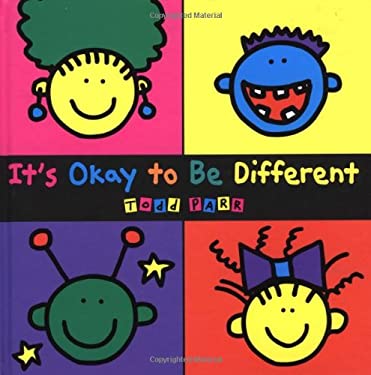
What concerns me, however, is the reaction Susan got from her Post article. So many feel that celebrating more than one tradition dilutes them all. I simply disagree. As Todd Parr says, "it's okay to be different," and our differences make us beautiful. So, here is another lesson from kindergarten.

Before the winter break, I get to teach my favorite unit: the festivals of light. It is the culmination of work started before Thanksgiving that celebrates the richness of our diverse country. What I find remarkable is that the celebrations have so many beautiful similarities. In November, I lay the foundation for the study with the unit called "we are all the same because we are all different." I read books by Todd Parr and give a presentation about the factual Harvest Feast of 1621(called the first Thanksgiving) using Scholastic's amazing virtual field trip to weave in the theme of sharing our differences and gifts with others. We celebrate our differences when we read different versions of Stone Soup. When we make our own soup, the students realize it would be far less tasty if there was only one ingredient instead of 17 different ones. That gets translated back to our classroom community where it starts to sink in that our differences are what make our class special and interesting.
 
The themes that link the winter festivals are beautiful - hope-giving light, the anticipation of spring, celebrations that bring family and friends together, giving to show thanksgiving, eating foods that help us feel connected to our cultural roots, and telling stories that remind us good will out. This is why I have no qualms about celebrating Christmas, Hanukkah, Diwali, and Ayyam-i-Ha all together.

This year, I have a student who is a practicing Baha'i. This child's parents are good teachers of their fatih and advocates for diverse religious representation in the classroom. From what I have learned so far, one of the main beliefs of the Baha'i is the oneness of God. Their winter festival is Ayyam-i-Ha, which celebrates charity, unity, and faith in God. I'm so excited to add this holiday to our repertoire. In February, we will make a service wreath to count down the days until the celebration. It is a lot like an advent wreath, but each card will have a service project on it. I'm starting to feel like Baha'is do a better job of celebrating the true meaning of Christmas than some of us Christians do.


Our wreath will look something like this, except on each card there will be an act of kindness I will challenge the students to perform.


This year, we will continue to celebrate both. For Hanukkah, we will give thanks that God works miracles. When we light the menorah and say the blessings, we will remember that we are connected to a rich tradition of being in relationship with God. Our hope that comes from God may sometimes be as small as a candle's flame, but it is eternal. When we light the Christmas tree, we will give thanks that God sends hope into the world. Sometimes it is in the form of a little baby born humbly in a manger. Sometimes, it comes in the form of a reconciliation village in Rwanda, in new friendships formed, or in the right words said at the right time. For us this year, it truly comes in the form of a baby boy. This child bears the hope of our hearts that we will raise a diplomat who can speak two religious languages and find God by multiple paths - a child who sees we are more the same than we are different, but our differences make us beautiful.


Sunday, December 11, 2011

Stop being busy and listen!

There are times when God's voice is as subtle as the brushes of a butterfly's wing that are my unborn child's first kicks. Then there are times when it is as loud the blast of an organ pipe. Yet it is most discernible when God speaks to me through the voice of a child.

At the school where I teach, the tradition in the kindergarten is to make gingerbread houses in December. It is a fun and tasty experience for the children and a lot of prep work for the teachers. The morning of our "build," I had to be out of the classroom for about twenty minutes before the event was to take place. Therefore, I was running around like a chicken with my head cut off from the moment I walked in my classroom door. Finally, just before we were about to start, I sat down with my students, took a deep, centering breath and said, "Friends, I'm sorry I've been so busy this morning. This time of year, there is so much going on, grown-ups tend to get a little crazy." I was about to explain the gingerbread making procedure when a hand went up. I called on the little boy and he said, "Mrs. Haber, in the Bible it says that right now, you're supposed to stop being busy and listen." From the mouth of babes we hear truth. It is so easy to forget this is the season of waiting and watching. Thank you, sweet child for reminding me what the Christ child means - peace.

Tuesday, November 29, 2011

Turning Thirty


I turn thirty tomorrow at 8:56 am. I'm nervous about it. There is something about thirty that dictates I know things like who I am, what I believe, how to live well, and who I want to be when I grow up, which is now. The finality of being a full fledged adult means I'm supposed to have my act together and in some ways I do. Marriage, house, dogs, job, long term savings - check! What God is calling me to do, how I should react to the burning fury I have in my heart about the state of public education, estranged relationships, how to raise an interfaith kid, my lack of spiritual discipline - all completely up in the air! So, because my default mode is nerdy research, I have turned to a book. Edwina Gateley is a poet and missionary who wrote A Mystical Heart, which is a 52 week devotional guide. Each devotional consists of a quote, a poem, an illustration, and an assignment. I began last week and my assignment was to plant something. It's been too cold or I've been too busy to do this literally. Instead, I planted an idea in my mind: I can proactively seek ways to live a spiritual life in relationship with God even when I'm busy and overwhelmed by life. I also planted in my heart that it is okay if this process is imperfect, stilted, or difficult. Thus, I began a new journey. This week's assignment is rather poignant. "Just be exactly where you are - it is where you are meant to be. Rejoice in it." Okay, I'll go with it. I'm supposed to be 30. I'm supposed to be wondering about the future and reflecting on the past. I'm supposed to be struggling with how to be more fully committed to a life with God. And I'm supposed to be wondering how my choice of an interfaith family will affect the little life growing inside me. I think I can live with this. Thank you, Edwina, for writing inspiring poetry and challenging me to rediscover my mystical heart.

Saturday, July 16, 2011

Genocide has many causes, but no reason: a lesson in compassion - part 2

I brought no cross, no prayer beads, no talismans, and no bible to Africa. I did bring ibuprofen, Imodium, Benadryl, Band Aids, and Doxycycline. While I was able to stave off Malaria and muscle pain, I wasn't sure I had the tools to ward off a darkening of the soul. Yet, when difficult moments arrived at Gisozi, Mayingye, Nyamata, and Murambi I realized I had tools available that helped me get through these experiences intact.


1. A Song in My Heart
I love my church, Belmont UMC. I especially love the Director of Music Ministry, Gayle Sullivan, and the truly inspiring pieces she and the choirs present each Sunday morning. The songs vary from African spirituals to Bach concertos, Wesleyan hymns to Taize. They always inspire a deep connection to the moment of being in time and space with other humans in God's presence during worship. A few Sundays before we left for Rwanda, I actually got to church in time to hear the call to worship and prelude. The choir chanted Keith Duke's You, Lord, Are in This Place - you can listen to an instrumental version here. It goes:

You, Lord, are in this place.
Your presence fills it.
Your presence is here.

You, Lord, are in my heart.
Your presence fill it.
Your presence is here.

I played this song in a loop in my head and heart as I walked through the memorials. It became my prayer - both a statement and a request. God, you must be here, please be here, surely you are here, you better be here, how dare you not be here, please come here! I begged and pleaded not to be in those places alone. The song became my mantra against the raging tide of questions burning at the pit of my stomach:

How devoid of God must the people here have felt when they were being murdered there? How could God have been there and let this happen? How did God let houses of worship become dens of death? Why did God seemingly abandon the people of Rwanda? Where was God's hand in this? Was it part of a plan? Was it "meant to be?" What was God thinking?

Answerless questions.

In my most desperate moments, I heard Alison Kraus' A Living Prayer, more recently touched me heart.

In this world I walk alone
With no place to call my home
But there's One who holds my hand
The rugged road through barren lands

The way is dark, the road is steep
But He's become my eyes to see
The strength to climb, my griefs to bear
This Savior lives inside me there

In Your love I find release
A haven from my unbelief
Take my life and let me be
A living prayer my God to thee

In these trials of life I find
Another Voice inside my mind
He comforts me and bids me live
Inside the love the Father gives

As with this song, I often feel uncomfortable with God the Father language. Limiting God to the masculine has serious negative theological and logistical consequences. But in this instance, it was the exact antidote I needed. Walking next to a dad who, to this day, holds my hand is a sensation I know well. Whether across a busy street or on a forest hike, my dad shows his love in the form of a steady, guiding, protecting hand. There, in Rwanda, I could feel the rough callouses of my dad's palm, the way he cracks his thumb knuckle, and how small and safe I feel when led by him. It gave God a foothold in my heart, a context in which I could feel His love. This manly, fatherly love led me by the hand through the dark places.

Yet, to feel God's love in these places felt tragic. At the memorials, I had to make myself feel God's love even when I wanted to feel a void, because if there was a void, it would all make so much more sense.

I wasn't going to get the answers to my questions in the way wanted. Instead, I was presented with a different view of tragic events that started to help me sort out the whys and hows.


2. For the Beauty of the Earth
Each of these horrific sites was located amongst devastatingly beautiful scenery. Not just pretty landscaping, the actual landscapes of Gisozi, Nyamata, and Murambi were stunningly gorgeous. Gisozi is situated atop a Rwandan "hill" (what we would call in Nashville a mountain) that overlooks the city of Kigali. The sun was setting over banana trees displaying ostentatious lilac and fuchsia beams through blue-gray clouds at Nyamata. Murambi looked like a verdant knob surrounded by the Blue Ridge Mountains.

The juxtaposition of natural beauty and unnatural horror was, at first, difficult to reconcile. They were painfully disparate. But as time passed, as time does, I thought about the beauty as being the constant, the default, the beginning. Before there were humans, there was foliage. Mountains formed without our help. The sun sets regardless of human affairs. God made all of this, too, was my thought. Instead of accentuating the differences, nature softened the blow. I took refuge in the visual context of the memorials.


3. Even when it's hard to look away, you can look away
My dear-heart friend, Hannah, sent me an email the day before we went to Gisozi without even realizing the impeccable timing she had giving this piece of pertinent advice. She new how obligated I would feel to be fully in it at these sites. So, she gave me permission to protect my heart when she knew I couldn't give it to myself. So I took it. When we approached the cave-like classrooms in Murambi filled with the chalky remains of men, women, children, and babies I glanced in and looked away. It was more than enough to smell the lime covered corpses to experience death there. At this memorial, they want everyone to look. It's gratuitous morbidity with a purpose. It's incontrovertible evidence that a genocide took place here. After being ignored by the international community in 1994, this is their "I told you so." I didn't need this kind of proof, but I understand the motivation to present it this way. Hannah's words were my shield and gave me permission to experience that site in the way I needed.


4. My companion, my friend, my spouse
From the moment we arrived on the continent, we were synced. He tuned in to my physical and emotional needs setting an appropriate pace for both. Following a tradition of his Jewish faith, we placed stones at the mass graves together. We witnessed the influence of Jesus' teachings on redeeming victims and perpetrators together. We did not go through these sites walking in tandem. It was more like there was a elastic string attached to each of us allowing an ebb and flow of space between us - enough space to let us process independently while always gauging the other's need for consolation. Weaving in an out of rooms and tombs, the string kept us in tight, breathable bond: eye contact, the squeeze of a hand, a head on a shoulder, a glance across a room. Our refrain was, "how are you doin'?" "Okay. You?" "Okay." It was more like we were saying, "I see you. This is hard for me, too. I'm right here if you need me." I fell deeply in love with the person I chose to be my partner almost five years ago and the person he became on this journey.


I learned that I have tools available waiting undiscovered, ready to reveal themselves exactly when needed - "unrevealed until its season, something God alone can see."


(The Hymn of Promise is a hymn I memorized in middle school. This was a regular exercise in choir practice and one my friends and I relished. I don't know if Gayle realized that when she had us learn these hymns that they would later serve as beacons of hope keeping us grounded in our community of faith, but this is a song that has seen me through many a hard time. Thank you Gayle.)


Tuesday, July 5, 2011

Genocide has many causes, but no reason: a lesson in compassion – Part 1

Our first day of studying genocide in Rwanda started at the Kigali Genocide Memorial and Museum. Upon entering the facility, you first pass an armed guard then a wide gravel parking lot. You are surrounded by gray, a man in navy blue, and an AK47. It is a daunting walk. Past a wall, a white building rises surrounded by verdant gardens, aquamarine shallow pools and a glowing orange flame atop a white sculpture. There is life. Every part of the memorial is intentional. The flame is a sign of mourning lifted upwards to heaven balanced on white poles topped with white knobs – reminiscent of bones and proud people standing tall. It is set in a pool of water symbolizing life. This yin and yang, light and dark, life and death, appear in multiple places throughout the space. Each time we were pulled toward despair, we were sucked back into hope. The seesaw affect was exhausting, but appropriate.

The tour started at the top of a flight of stairs. Each step was short, leading us gradually towards the mass graves. Then, after walking through a shady canopy of brilliant yellow lilies upheld by trellised vines, we stepped out onto descending stone slabs about 50 yards long. The mass graves were dotted with baskets of flowers adorned with ribbons stating “Never Forget” in three different languages. We walked down the path to the last slab, which was still open. Glass paned doors revealed purple and white cloth-covered coffins each emblazoned with a cross. The shiny satin seemed as gaudy as the pristinely white sign of the cross making death look so neat and tidy. Pretty crosses have never made sense to me.

I couldn’t believe we didn’t bring flowers to the graves. Why hadn’t I thought to pick up some lovely silk peonies before our trip? I felt ashamed by my thoughtlessness. Then, I looked down and under my feet was agate gravel; iridescent white, streaked with burnt orange and reddish pink – almost bloodstained. I picked up a stone and remembered a tradition.* Whispering, I explained to Benon, “In our family, it is our custom to place stones on a grave.” Then I asked, “Do you think anyone would be offended if we placed stones here?” He replied in his Yoda-esque, sing-song way, “Not a problem, I think.” I showed Matthew my stone and he picked one up also. We walked up to an out of the way spot and placed the stone on the grave. I couldn’t let it go. Tears welled up and burned my eyelids. I spoke to God, “Please bless this place and the memory of the people buried here. May their souls and those who mourn them be free from fear, free from compulsion, blessed with love, blessed with peace.” It is a prayer I read about in Rabbi Rami Shapiro’s book, The Sacred Art of Loving Kindness (p.27). It is a Buddhist practice of Metta prayer and compassion.

Before coming to Rwanda, I knew I had work to do on being compassionate. When I first read Loving Kindness, Rami’s words on fearless compassion stopped me cold. I couldn’t move past those pages of chapter 3. It wasn’t until at least the third try that I made it past the chapter and finished the book. It took over a year. I had too much fear and too much empathy to engage in compassion, as well as some misconceptions. I always assumed that having compassion was equivalent to feeling sorry for someone and through that sensation, being motivated to do something to alleviate their pain or suffering. I also took compassion to mean empathy – intimately sharing someone else’s feelings. I thought, if I can feel a victim’s pain accurately enough, I can absorb some of it and thereby diminish his or her pain. Through compassion, I could also ward off the things I feared most; that somehow my “hyper vigilance” in experiencing someone else’s suffering would ward off my own (thank you Tina Fey for accurately putting this practice into words in your memoir, Bossy Pants and thank you Hannah for telling me about it). For example, if I felt enough of a rape victim’s pain, I would avoid being raped. If I practiced loved ones’ funerals in my imagination, they wouldn’t die tragically before their time. Insanity.
More recently, I came face to face with my lack of compassion skills when I was teaching at an inner-city school. The children were faced with horrors I didn’t believe existed beyond Hollywood crime dramas. Complicated issues of race, poverty, religious persecution, language barriers, neglect and abuse awaited them every day at dismissal and there was so little I could do about it. So, I took on the mantel of their pain and anger. I became useless in the classroom and ultimately took a position at another school. Trying to absorb all the pain my students felt left me incapacitated, stripped of my strength, stressed to the point of illness, frustrated to the point of lashing out at their misbehavior, gasping for breath, and gritting my teeth so hard that one broke.

Slowly, I have realized that being a feelings sponge is not a useful endeavor nor is it truly compassionate. The word is deceptive. Compassion means to suffer with and I took it literally. But, this is a fruitless pursuit. As Rami says, “If I come to you in pain and you end up with the same pain, all we have done is add to the world’s suffering” (22). That year at Cameron Middle School, I added to the world’s suffering.

This trip has been about the second part of compassion: letting go. I can share the suffering in the moment of visiting the memorial, I can use that pain to motivate me to share Rwanda’s story so that “Never Again” will become a reality, but I will not add to the pain of the genocide by taking that pain into my being and letting it manifest itself in me.

Placing the stone on the mass grave was my first true act of compassion. Holding the rock, praying through tears, squeezing my partner’s hand, and then releasing the rock, I let it go. By not carrying the weight of that place on my heart, I am light enough, free enough to act as an advocate and educator.

But, this was only the beginning of the tour. Not only did I have the rest of the memorial and museum to go, but two more days of experiences ahead.

*Placing small rocks or stones on a grave is a Jewish tradition that I first experience at Matthew’s grandmother’s gravestone setting service. It is a beautiful remembrance and sign of love and respect, though I don’t know much about the tradition’s history.

Thursday, June 9, 2011

When your spouse asks you to go to Africa...

You say yes.

Now for the back story:

I love sharing my profession with my spouse. Being teachers, we have many perks including, but not limited to summer break, winter break, spring break, and fall break. We also get to work with interesting people both young, old, and in between, we get to be creative everyday, and we continue to be learners through professional development opportunities. One such opportunity came up out of the blue this spring. Matthew's school recently received a grant to sponsor a teacher to travel anywhere that would help his or her teaching philosophically or practically. He applied and didn't get the grant. But, his boss thought his proposal was so compelling that he is getting to travel to Africa anyway. You can read his take on it here.

Why Africa?

In my humble opinion, one of the most compelling classes his school offers is a seminar called Social Conscience. I wasn't able to take it when I was there, but my spouse was and now teaches the course himself. The course description is:

Social Conscience is a discussion-based seminar course designed to make the student think, question, and to try to arrive at answers about his/her own ethical and moral outlook on life and about the nature of his/her responsibility to society. At the core of the course is a single question: What makes good people do evil things? While we use the Holocaust and other case studies as paradigms, the course fits it into a broader context. It is structured so that we study first our own identities, and hopefully come closer to understanding who we are and what values and forces shape us. Then we examine the situational and systemic influences that may make those identities more fluid than we might like to believe, and decide—how capable of evil are we?

In his class, Matthew requires his students (16, 17, and 18-year-olds) to consider the Roman playwright Terence's statement, "I am a human being; nothing human can be alien to me." Even at 29.5, I'm not sure I'm truly ready to confront, dissect, and evaluate this assumption.

One of the case studies he presents is the 1994 Rwandan genocide. It was brutal and horrific. It was humanity at its worst - neighbor killing neighbor. And yet, over time, and with great effort and intention, the nation of Rwanda and its people are healing. Now, the world is getting a glimpse of humanity at its best - neighbor forgiving neighbor and my spouse would like to see it, hear it, and feel it first hand.

At first, this was going to be a solo trip. His school is sponsoring only him to go. Then, one day a couple of weeks after he was sponsored, I get a phone call on my way into boot camp. "Do you want to go to Africa with me?" I was stunned, honored, scared, and excited all at the same time. He said the experience would be diminished without my company, which gave me that teenage sensation of having butterflies in my stomach and little bluebirds singing around my head. He wanted me to go with him to experience the brokenness of a people and witness them gluing themselves back together. He encouraged me to think about it.

Even though my gut reaction to the proposal was, "of course!" I still had to mull over all the valid reasons not to go. There were the shots - I have a severe needle phobia. There was the cost of the plane ticket and it is three LONG flights - 21 hours to get there. Naturally, we would want to spend another chunk of change on tickets to track gorillas. It's a lot of money. Plus, my summer is already booked with camps and trips and lunch dates, there is so much work to be done on our new house, I hate being away from our dogs, and my mother would freak out!

To my mother's credit, when I called to tell her I was going, and despite her propensity to worry, her defiant response was, "Well, I'll drive you to the airport!"

Traveling with anyone tests your relationship. The stresses of catching a plane, jet-lag, gas-inducing airport food, my airplane curse (I inevitably get seated next to large men wearing tweed jackets, behind crying babies, near toilets, and across from town criers, Jehovah's witnesses, evangelical republicans, or hipsters wearing patchouli to hide their b.o.), hailing taxis, carrying luggage, and finding a hotel after sunset wears you thin. Remaining civil and patient is about as easy as keeping our dogs from barking at squirrels. Traveling with the purpose of seeing genocide memorials and listening to people recount stories of death and destruction adds a whole other perilous level of stress.

After boot camp was over and I was as physically spent as I was emotionally, I lingered to talk with my instructor. Perfectly sculpted, coiffed and mascaraed, and carrying herself like she could climb Mt. Everest with you on her back, you know she is a fitness instructor. I'm not sure why she was the person I needed to tell about my dilemma. While I had been taking the class for many weeks, I did not know her well. But, when I told her my spouse asked me to go to Africa with him and what should I say, she said, "you say yes." I then learned her story. Her husband passed away unexpectedly the year before. And while she did not seem to judge my hesitation, she told me to go for it with longing conviction. She said, "this will be a game changer," and I knew she was right.

She professed her faith to me in that conversation. It is the kind of faith I hope I never know because it comes from the desperation of an inexplicable loss. She talked about Jesus, and God as Him, effortlessly quoted Revelations and Genesis with ease, and stood firm on her assumption that everything happens for a reason. I'm embarrassed to say this is the kind of witnessing that usually makes me avert my eyes, snicker under my breath, and obsessively fidget. Being in an inter-faith marriage makes me hypersensitive to Southern Baptists, Church of Christ conservatives, and evangelicals of all persuasions. I run from "members only" mentality and question-less religiosity. But in this case, I was all ears and open heart because this person standing before me knew the consequence of not seizing every possible experience with the love of your life.

Her testimony reminded me of the first page of Madeline L'Engle's A Wind in the Door, one of my favorite tween books, which, ironically, quotes Revelation 3:8-

I know your deeds. See, I have placed before you an open door that no one can shut. I know that you have little strength, yet you have kept my word and have not denied my name.

This is an open door moment.

So I said yes. Yes because this really could be a game changer. Yes, because, when we stand before rows of skulls at Ntarama Church Memorial, terrified in the face of evil, we will hold on to each other for dear life. Yes, because, I want to see the look of awe on his face when he stands yards away from mountain gorillas. Yes, because our experience would be diminished by the absence of the other. It could be one of the most difficult and romantic things we ever do together and I can't wait.

Wednesday, June 8, 2011

Ode to Friends (an indulgence)

One of the greatest blessings in our lives has been our friends. Both my spouse and I have been blessed with people who hear our heart songs; people who can understand and speak our language, get our sense of humor, poke and prod us to have adventures, inspire us to create, and keep us honest by being honest with us and sane by balancing out our quirks with theirs.

My spouse and his best friend have been buds since they were three years old. When we started dating in high school, they were a package deal and we became the three musketeers. At first, I was a little jealous of their bond. It was like they spoke in code and always referred to inside jokes. But the more time I spent with them, the happier I was in their presence. If Matthew and Steven were going to the driving range, I went too. If Matthew and I were going to dinner and a movie, Steven went too. Soon, I learned the code and was privy to the inside jokes. I enjoy my spouse the most when he is with his best friend and revel in the hilarity that inevitably ensues.

Unfortunately, Steven lives 2005 miles away.

This weekend, a friend from our college days will come stay with us. He knows about those tender, tumultuous times before our engagement when life was without obligations and we were free from making hard choices, but struggled to define who we were in the world as individuals. When we are around Krishna, we are more carefree and fun-loving. We can't wait to play and reminisce with him after he travels 471 miles to get here.

Likewise, my friends bring out the best in me. Lately, three friends have especially been in my heart. My lifelong best friend, Cara invited me to speak at her beloved church camp this week about the Good Samaritan. I feel honored to have been asked and thrilled that I got to go. This camp has been a spiritually significant place for my friend since she was in high school. It was a joy to finally see the lush forest, the rustic cabins and lodge, and gravel roads that nurtured her spirit for so long.

Cara is soon to live 471 miles away.

Then there is Hannah. Over the past few days, my spouse and I have been nesting. We bought our home last summer, moved in last October and we are just now hanging art on the walls, painting doors, and reinstalling switch plates. She would be all over this. At our old house, while we were at work Hannah would pop in (usually tripping the alarm in the process) and rearrange furniture, decorate, and leave little suggestions on post-it notes in odd nooks and crannies for me to find. We would say prayers over cups of coffee and chocolate chip cookies, trade left-overs, and sing silly, punny songs. As my first adulthood friend, we shared the growing pains of transitioning out of adolescence together. We used to be neighbors, but she's never been to our new house and it breaks my heart.

Hannah now lives 2223 miles away.

Carmen is becoming an ordained Episcopal priest this weekend. She has worked long and hard to be at this special moment in time where she can fully step into her call to do God's work. It has been amazing to learn from her process of hearing a call into ministry, the commitment it takes to get there, and the healing power of helping others. From a distance of 963 miles, I saw grace enter her life to mend old wounds and open new doors. I am so proud of her and can't believe I won't be there to celebrate with her.

One of the cornerstones of our marriage is the effort we make to keep in touch with friends who live far away and those who are right here in our town. Within our marriage, we save space for others in our hearts to enrich our own relationship. Maybe that comes out of being interfaith. We've grown accustomed to letting in the other and our attitude reflects the more-the-merrier mentality we have. Helping each other nurture these friendships makes our marriage more enjoyable and strengthens our own marital friendship.

Having long distance friendships is hard, but when we see special places in our long distance friends' lives, it makes us feel closer to them. When we're on the phone with them and their at their local coffee shop in the morning, we can almost smell the grounds brewing. When a friend is lounging on their couch chatting about potty training, I can feel the squish of the couch cushions and hear the pitter patter of little feet running across blond hardwood floors. In our mind's eye, we are there with our friends. I am grateful for the opportunities we have this summer to see many of our friends and wish there were more chances sooner than later.

To our friends: We miss you and love you!

Sunday, May 15, 2011

Love your enemies: kindergarten style


I don’t normally invite God into my classroom. Not only do I strongly believe in separation of church and classroom, being in an interfaith relationship increases my awareness of the subtle ways in which majority Christian culture can entangle itself in my curricular choices. Diligently, I strive to present a balance of perspectives and traditions. Last week, however, a conversation took place amongst my students that let me see how they cannot always compartmentalize their religious beliefs as we adults tend to do. And, I experienced, for the first time, how God can be present in a respectful way in my classroom.
Last week was the second to last week of school. Teachers, you know what this means: assessments, report cards, taking down work off the walls, sending mementos home, finishing that one last project, end of the year parties, yearbooks, field day, and lots of mixed emotions. The other day, those emotions got the better of my students resulting in retaliatory behavior. One child did something mean so the other did it back. Eye for an eye, right?
The moment came today when we needed to have the sit-down conversation, the “come to Jesus” moment that I always dread with my students. Here’s how it went...
“Okay, friends, we need to talk. This is important. It’s almost the last week of school and that is making us feel lots of different things. We’re happy because we have learned a lot. We’re excited about a fun summer filled with vacations, camps, and just relaxing. We’re also nervous about next year and a little sad about missing our friends. All these feelings are making us act in different ways. These emotions look different for everyone, and that is okay. Some of us are getting very quiet and calm. Others are getting loud and out of control. I’ve noticed that some of you want lots of hugs and to talk about our memories. And some are getting grumpy. As long as we don’t hurt anyone, all of these are okay. I have a question for you. When someone is mean and you’re mean back, what do you have?”
“All mean things!” they shout.
“What happens when someone is mean and the other person is nice anyway?” I ask, hoping for a similar rousing response. Instead, there was a rumble of debate.
Then, I told them the story. I told them I helped the mean ladies on Shelby Avenue who didn’t say thank you. They were rapt, drawn in to the magic of a real life Grimm-style fairy tale set in the dark with evil lurking right around the corner. I told them, even though they were not nice, I still felt good inside. The End.
I was on a roll. “So, the next time someone is mean to you, what are you going to do?”
Silence.
Then, a little girl from right beside me said, “That reminds me of what we are learning about at church!” Oh, no. This is the moment I always dread. Whenever we have civics lessons, I wait for this moment. Jesus at school – what do I do? Quick, change the subject! Usually, I would say, “how interesting that you made that connection” and then I would ramble on about how each religious tradition has its own version of the golden rule, but to each his or her own, yadda, yadda. This time, I didn’t go there. I let her speak.
“Well, this thing is a really hard thing to do, but we’re supposed to love our enemies even though they’re our enemies because we’re supposed to.”
In that moment, I felt like our class could love everyone in the whole world and that everyone in the whole world was lovable.
The children erupted into stories of their own: acts of kindness they witnessed, mostly of their parent’s actions and even some opportunities missed. They connected these stories to our service learning project. Just as our smallest acts of kindness, like collecting pennies for Habitat for Humanity, when combined with others’ makes a big difference for good, so can small acts of meanness lead to big bad things.
Their voices, the voices of children rang clear and true in my ears. In a circle of six-year-olds I heard God’s call to love one another and I couldn’t kick God out of the conversation. Each child, with all their differences, had a story to tell and a personal connection to my story. They seemed relieved to have a safe place to share their experiences of church and temple lessons learned. I don’t think this could have been contrived and I don’t know how I could ever replicate this conversation with another group of students, but it was a good reminder that I’m not in full control, I don’t always see the whole picture, and children make excellent teachers.

Sunday, May 8, 2011

Interfaith Bunny Cake


I realize this is past due, but I had to post this picture. Easter morning, we had some friends over for breakfast who ran the gamut of belief systems and non-belief systems. Together, though, we decorated this guy. The pagan symbolism of Easter is about hope through the inevitability of the life cycle. Bunnies will procreate, chicks will hatch, daffodils will bloom, days will get longer and warmer, and friends will come together to celebrate.

It didn't matter what we believed about the resurrection of Jesus that morning, but being together with our diverse group of friends helped me feel the hope of the resurrection story. As ugly as life can get, as mean as we can be to each other, as much as we hurt in body and spirit, decorating a cake cut into the shape of a rabbit with a bow tie will make you smile.

I'm so glad it's spring.

Thursday, May 5, 2011

Cookies of Remembrance

One of my sweetest memories from my wedding is of cookies. A dear friend made them for my bridesmaids' luncheon and served them with great ceremony. Rosemary is a symbol of remembrance and fidelity, which is most appropriate for a wedding. The evergreen, woody aroma and pungent, earthy flavor always make me feel grounded and connected to my roots. These cookies are also delicious! I made them tonight for a cake walk, so I thought I would share the recipe:

1/2 c butter (2 sticks), softened
1/3 c sifted powdered sugar
1 1/2 cups flour
2 Tablespoons chopped fresh rosemary

Preheat oven to 325.
Beat butter, add sugar, then flour, then rosemary until just mixed. Do not over-beat!
Form into a skinny log (about the size of a silver dollar) and cover with cellophane.
Refrigerate for at least an hour or until firm.
Slice in 1/2 inch rounds and place on a parchment lined cookie sheet.
Bake for 12-15 minutes, or until slightly brown on the edges.

Tuesday, May 3, 2011

The Good Samaritan or How I Almost Got Myself in Trouble

Last Friday night, I made a potentially dangerous choice. The thing is, at the time, it didn't feel like a choice. It was an impulse, an automatic reaction. As I exited the interstate onto Shelby Avenue in East Nashville, two women were trying to flag someone down. The hood of their SUV was propped open. I rolled down my window and they asked if I had any jumper cables. I said yes. I assumed that I had some in my trunk. Then, they bossily guided me into position so that my hood was aligned with theirs and my trunk was aligned with oncoming traffic. It was dusk. I put my purse under my seat, got out of my car, approached the women, and said, "I hope you don't take offense at this, but I've been hijacked before (true story), so I have to ask, are you good people?" They said yes so I proceeded to look for the cables. Turns out, I didn't have any and the women were peeved. As they were asking me to take them to an auto repair store and use my cell phone I started wondering if I'd been had. In an effort to get myself out of this situation with some grace, I tried to flag down someone else. A man finally stopped and was willing and able to help. I had the sinking feeling he stopped more for me than for them. He tried to explain what was going on with their car while they cursed the repair person who had told them it was their alternator, not their battery that needed fixing. As soon as he removed the cables, I thanked the man profusely, got back into my car and drove away. Not once did the women say thank you.

Let me give you the visual. I was on my way to a birthday party. The theme was the royal wedding, so I was wearing a bridesmaids dress, heels, and my Easter hat from third grade. The two women were dressed like normal people in jeans and blouses. When I got out of my car, the women said, "Are you going to the prom or something?" What business did I have stopping in that get-up?

Ever since I left the scene, I can't stop wondering why I stopped to help. Did I stop because I've heard the parable of the Good Samaritan too many times? Do I have a hero complex? How many times have I seen my father disregard his own safety to help others? Am I naive or just plain stupid? I knew as soon as I pulled away that my spouse would be livid with me for having put myself in harms' way. I almost didn't tell him. It's happened before and his concerns are entirely legitimate. Out of respect for him and concern for myself, I should have just kept driving. My mother even suggested an obvious alternative to stopping. Our city has a non-emergency hot line (615-862-8600) I could have called and they would have sent someone to help. Yet when the moment was upon me, I simply said "yes" and pulled over to help. I blame a sermon I heard nine years ago for my gut reaction.

Reverend, Dr. Carmen Lile-Henley is one of the most inspiring preachers I have ever heard. When I was a sophomore in college, I heard her give a sermon on the Good Samaritan and it forever changed the way I hear that story.

Growing up, I misunderstood the Good Samaritan to be a person who performed a selfless act of kindness. He was an unlikely person to show compassion in this story because he was an outsider, a minority. The priest and the Levite were shameful representations of majority culture. They are like us at our worst when we become rubber-neckers instead of good-deed-doers. It was a fairly simple and straightforward story, I thought.

Then, I heard Carmen preach. She used guided imagery to help us imagine being each character in the story.* She also clarified the details by putting the story back into a Jewish context.** She turned the story upside down when she told us to imagine being the injured man...

There I am on the side of the road. I've been robbed, beaten, and left for dead. My body is so traumatized, I go in and out of consciousness. People pass and do not stop, people who look nice and should stop, but they are busy and I am invisible. Then, after an agonizing number of hours, someone finally does stop. He gently carries me to a hospital and says, "fix her. Spare no expense because I'm paying the bill." When I wake up, I want to thank my rescuer. When he comes in the room, his arms are covered with swastikas. His head is shaved. His chest swells unnaturally large in his wife-beater shirt stained yellow under his arms. His gun gleams in its holster. I know in an instant he is a rapist, a child molester, a thief, a terrorist. This is the man who helped me? How dare he!

Carmen said that this is the message Jesus wants us to hear in this story. Not, would you stop and help, but would you let anyone, including your enemy, stop and help you? Do you see every child of God as your neighbor, because they are.

Hearing the story in this way expanded my concept of humility and compassion in an instant. The Samaritan is the least likely person to help because he or she is the person from whom I least want to receive help. It is the person I revile, abhor, and hate. But in that moment of my enemy helping me, I realize he is human. It stings like a slap because I'm ashamed I didn't see it before. We are more alike than different. We are part of the same human family. How much more would I rather dismiss him from my reality? How much more would I rather we have nothing in common? I would never want to be anything like this person, but our fraternity is inescapable in the love God has for all people. It binds us together no matter how strongly we resist it.

The women I helped were irritable. They were annoying, ungrateful, haughty, and mean-spirited. They wouldn't take no for an answer. In many ways, we were enemies: different class, race, age. All logic says I made a bad choice. Still, in my heart, I don't regret it. Nor can I blame my husband for being upset with me. After all the episodes of Oprah, Law and Order, and The Closer I have watched, I should know better than to trust strangers. His concern comes from a passionately loving and protective place in his heart. After days of reflection, I continue to struggle with how to show respect for my spouse and my marriage by keeping myself as safe as possible with how to answer God's call to help my stranger neighbors. I don't think there is an easy answer.

*Here are instructions on how to use guided imagery as spiritual practice.

**As A.J. Levine says in her book, The Misunderstood Jew, we modern Christians often miss the punchline of Jesus' parables because we do not understand the Jewish context of the stories.

Monday, May 2, 2011

I hate this article

This article about an interfaith couple in Brooklyn was published today in my local paper. It was already published three weeks ago here. I wonder, do you agree that the religion of your unborn, unconceived children must be determined before you get married if you are to have a successful interfaith marriage?

The article makes me uncomfortable. Actually, it makes my blood boil. It presumes that there must be an argument where I hope for dialogue. It asserts that one religion must dominate the marriage and negates the individuality of the partners.

Sharing our differences can make our own beliefs more robust or it can change them altogether. Engaging in the conversation allows us to be vulnerable as it highlights our weakest arguments. But in that vulnerability, we have the opportunity to become more honest with ourselves. I have found it immensely rewarding to question my own assumptions. I thought I had to say "Our Father" instead of "Our Creator" until I attended a United Church of Christ service. I assumed that Jesus was entirely novel, but through learning about my husband's heritage, I have learned his teachings are firmly grounded in Judaism. I assumed most recently that being worm food is enough when I die, then I spoke with a evangelical friend who got me thinking it isn't using the example of the Holocaust. I used to believe there was a reason for everything, then my Wesleyan campus minister said Jesus didn't have to die, he chose to die and it changed my entire worldview. If Jesus didn't have to die, then my friend's mom didn't have to get cancer. The same minister told me that I could be mad at God and read me psalm after psalm of bitter complaints about injustice, which got me through teaching in an inner city school. Often, I find my arguments were weak because I never had to question them. When we are forced to justify our convictions, we look at them critically. This leads to compassion because we see the world through larger lenses. We start to understand our neighbor's point of view and become tolerant, then accepting, then embracing. Why can't we do the same in our marriages?